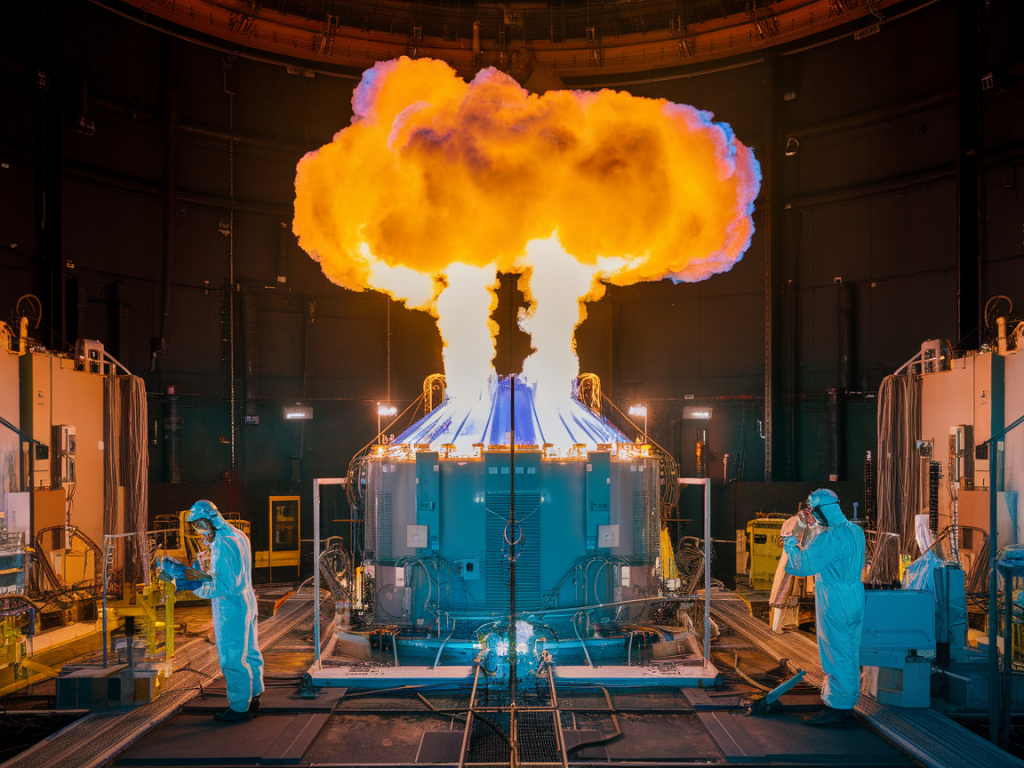
I remember the first time I saw video of a fusion reaction that produced more energy than it consumed. It felt like watching history accelerate: a glowing plasma pinched tight by magnetic fields, a brief flare that hinted at a future where energy scarcity might be a choice, not a destiny. Since then I’ve followed breakthroughs, funding rounds and policy debates closely — because the ripple effects of commercial fusion would touch markets, geopolitics and everyday bills.
What changed in fusion research — and why it matters
Until recently, fusion was mainly a long-term scientific bet: tantalizing in theory, stubborn in practice. The latest wave of breakthroughs isn’t a single "Eureka" but a series of improvements across materials, magnets, laser systems and plasma control. Combined, they push fusion devices from experimental curiosities toward pilot plants capable of sustained, net-positive energy output.
What’s new is scale and confidence. Private startups such as Commonwealth Fusion Systems, TAE Technologies and Helion have attracted billions alongside public projects like ITER. Higher-temperature superconductors, advances in computational modeling and more reliable manufacturing mean smaller reactors, faster development cycles and lower capital-per-megawatt projections than had seemed realistic a decade ago.
How energy markets could be reshaped
If fusion becomes commercially viable, the market implications are far-reaching:
- Baseload reconfiguration: Fusion promises dispatchable, low-carbon baseload power without the intermittency issues of wind and solar. That could depress demand for peaking gas plants and change the economics of energy storage.
- Commodity price pressure: Less reliance on natural gas and coal would reduce fossil fuel demand, potentially lowering prices. Countries dependent on fossil-export revenues could see significant fiscal impacts.
- Grid investment shifts: Grids optimized for variable renewables may need redesigns for concentrated fusion plants — different transmission loads, new siting considerations and updated stability protocols.
- Industrial electrification: Cheap, consistent electricity makes electrifying high-heat industries (steel, cement, chemicals) more practical, shrinking industrial emissions and disrupting incumbent fuel supply chains.
- New seasonal dynamics: Fusion’s lack of weather dependence would reduce seasonal variability risk, affecting hedging, futures pricing and the role of seasonal storage.
Who stands to profit — and who could lose?
Winners and losers will emerge over decades, not overnight. Here’s how I see the major stakeholders being affected.
Potential winners
- Fusion technology providers: Companies that achieve reliable, economical fusion reactors (both startups and national labs) will capture enormous value — direct energy sales, licensing of reactor designs, and services for operation and maintenance.
- Grid operators and utilities that adapt: Utilities that integrate fusion plants into diversified portfolios early could secure low-cost baseload flows and offer competitive tariffs, especially in industrial regions.
- Manufacturers of superconductors, magnets and control systems: Suppliers of specialized components will see growth similar to what semiconductor suppliers experienced with mobile computing — think high-margin, scalable orders.
- Industries that electrify: Steelmakers, chemical firms and data centers that shift to fusion-powered electricity will gain cost and emissions advantages, potentially reshaping global supply chains.
- Investors in early-stage fusion: Venture funds and corporate investors that back successful fusion firms early stand to reap outsized returns. Public market entrants will also attract significant capital if commercial milestones are met.
At-risk parties
- Fossil fuel exporters: Countries heavily dependent on oil, gas or coal exports face fiscal shocks if global demand for hydrocarbons diminishes. Sovereign budgets and debt servicing could come under pressure.
- Peaking power operators: Gas-fired peaker plants and certain storage-as-a-business models might see shrinking margins as fusion takes share in reliability services.
- Regions slow to adapt: Economies that fail to retrain workforces or pivot industrial policy could miss out on new manufacturing and construction opportunities, leaving communities behind.
- Incumbent energy service firms: Companies wedded to legacy fossil infrastructures without diversification strategies could decline unless they repurpose assets.
What investors and policymakers should watch
For investors, the timeline is the single biggest uncertainty. Early-stage bets are high risk; winners will require clinical execution on engineering, licensing and scaling. I’d be watching:
- Commercial milestones: Sustained net energy gain, plant uptime, and cost-per-megawatt targets are the metrics that will move valuations.
- Supply chain readiness: Manufacturing scale-up for magnets, vacuum vessels and cooling systems will be the chokepoints or accelerants.
- Regulatory frameworks: Licensing regimes, safety standards and public acceptance influence pace and capex.
Policymakers must balance acceleration with caution. Clear licensing pathways, targeted R&D subsidies and workforce retraining programs will help domestic industries capture value. Meanwhile, countries that subsidize deployment risk distorting markets if technologies fail to scale.
Questions people ask — and how I answer them
Will fusion make electricity cheap? Possibly — but "cheap" depends on learning curves and capital recovery. Early plants will be expensive; mass manufacturing and standardization will drive costs down over time, similar to solar panels and batteries.
How soon will fusion affect my bill? Realistically, significant consumer-level impacts are more likely in decades than years. Expect pilot commercial plants within the 2030s if current momentum holds, with broader market penetration stretching into the 2040s and beyond.
Is fusion safer than fission? In many respects, yes. Fusion doesn’t produce long-lived high-level radioactive waste at the same scale as fission, and reactors have intrinsic shutdown properties. But safety, waste handling (tritium management, for example) and regulatory oversight remain critical.
Strategic playbook I’d recommend
- For governments: Fund demonstration projects, streamline licensing and create transition funds for fossil-dependent regions.
- For utilities: Diversify portfolios, pilot partnerships with fusion firms and invest in grid flexibility to manage new load profiles.
- For investors: Maintain a balanced approach: allocate a small portion to high-risk fusion startups while tracking component suppliers and established industrial electrifiers.
- For companies in hard-to-abate sectors: Start technical pilots now to be ready to switch to low-cost, high-heat electricity when fusion becomes available.
| Timeline (rough) | What to expect |
|---|---|
| Near term (5–10 years) | Pilot reactors, concentrated demonstration sites, supply-chain development |
| Medium term (10–20 years) | First commercial plants, localized industrial adoption, initial market disruption |
| Long term (20+ years) | Widespread deployment, material shift in global energy mix, geopolitical and market rebalancing |
Watching fusion isn’t just watching science — it’s watching an energy remake. The technology could offer cleaner, more reliable power, but the market story will be written by those who translate laboratory success into scalable, affordable infrastructure. I’ll be tracking the companies that clear that gap, the countries that make smart industrial bets, and the markets that start to price in a post-fossil landscape. For readers, that means staying curious, sceptical and strategically positioned: both opportunities and dislocations lie ahead.