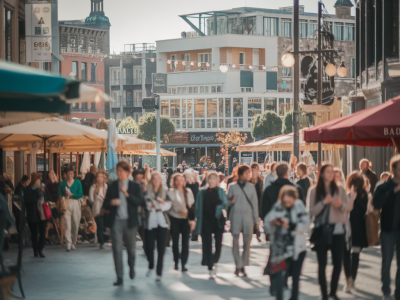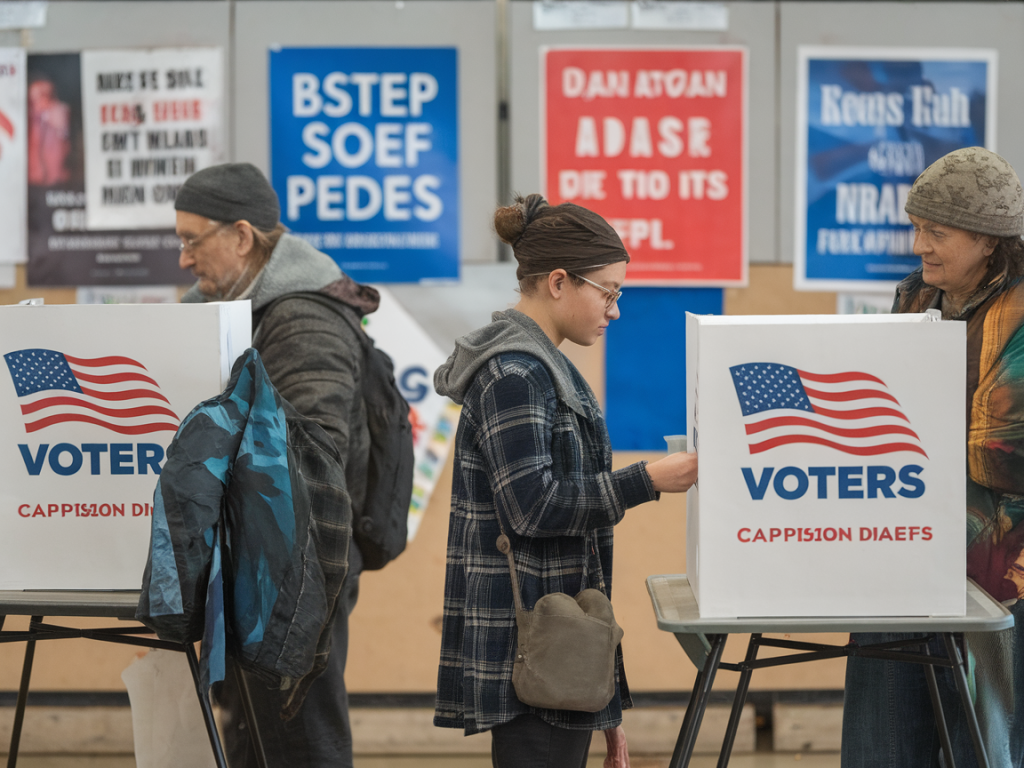
I remember the first time I noticed the gap: during a regional election, pollsters on air confidently predicted a tight race, but the turnout — driven by a surge of young voters mobilised on social media — swung the result in a way no survey had foreseen. Since then, I’ve watched the same pattern repeat across countries and cycles. Polling isn’t broken in principle, but it systematically underestimates young voters for reasons that are both technical and cultural. Campaigns, for their part, are scrambling to close that gap using digital organising, innovative sampling and old-fashioned door-knocking adapted for a mobile era.
Why youth are often missing from polls
There are several overlapping reasons pollsters miss younger voters. Some are methodological — the nuts and bolts of how we collect data — and some are behavioural — how young people interact with institutions, phones and politics.
Nonresponse bias: Young people are less likely to pick up unknown calls, respond to landline surveys or complete long questionnaires. Pollsters who rely on random digit dialing or panels that were built before mobile dominance will struggle to reach them.
Likely-voter screens: Many surveys ask a battery of questions to determine whether someone is a “likely voter.” These screens often rely on past voting behaviour (“Did you vote in the last election?”) which inherently excludes first-time voters or those irregularly engaged. The result: models assume lower youth turnout and downweight their voice.
Sampling frames and coverage error: Traditional sampling frames underrepresent mobile-only households and people who move frequently — categories that skew young. If your frame disproportionately draws from registered voters lists, you miss unregistered youth who may be persuadable or newly motivated.
Social desirability and response effects: When asked directly by a stranger or over a phone, younger respondents might offer the answer they perceive as expected (e.g., “I’m interested in politics”) but then fail to act. Conversely, in some contexts they might withhold preferences due to privacy concerns.
Timing and momentum: Young voters can be mobilised quickly — through a viral TikTok, a surge in student protests, or a high-profile cultural moment. Polls are snapshots; if a wave of activism arrives late in the campaign, it’ll show up in turnout but not in earlier surveys.
How campaigns are adapting to reach and measure youth
Campaigns know the numbers matter, and in recent cycles I’ve seen them experiment vigorously. Their efforts fall into two broad buckets: getting youth to the polls (and into sample frames) and improving the fidelity of measurements.
- Registration and turnout platforms: Tools like Vote.org, TurboVote and Rock the Vote have become standard. They reduce friction — online registration, calendar reminders, absentee ballot guidance — and they also generate direct contact data that campaigns can use to build lists and target persuasion.
- Digital microtargeting: Campaigns buy targeted ads on Instagram, Snapchat and TikTok, but more importantly they use lookalike models and email/SMS lists to engage young people where they are. Peer-to-peer texting services (e.g., Hustle, GetThru) let volunteers send personalised messages at scale — a method that has proved more effective with younger demographics than robo-calls or direct mail.
- Influencer and creator partnerships: Political messages wrapped in creator content travel differently. Campaigns and advocacy groups increasingly partner with creators who can explain voting mechanics or endorse causes in culturally fluent ways.
- On-the-ground youth operations: Campus organising, vans staffed by young staffers, sponsor events near universities — these are old tactics adapted with modern tracking (QR codes, event RSVPs) to translate engagement into reported intent and actual votes.
- Advanced modelling and data integration: Campaigns blend voter files, social media engagement, donation records and event attendance to create a richer behavioural profile. This helps identify persuadable young voters who aren’t captured in conventional polls.
How pollsters are changing their playbook
To close the gap between measured sentiment and real-world youth turnout, polling organisations are experimenting too. I’ve spoken with researchers who describe this as a period of active repair — not wholesale reinvention.
- Oversampling young voters: Polls now sometimes deliberately sample more under-30s and weight results down to correct for demographics. Oversampling improves the precision of estimates for subgroups where raw sample sizes used to be tiny.
- Probability-based online panels: Firms like Ipsos and YouGov use panels recruited with probability methods, not just convenience samples. That helps with coverage of mobile-only and hard-to-reach respondents.
- Multimode contact strategies: Combining SMS, app-based surveys, online panels and targeted social ads improves reach. Younger respondents are more likely to answer an in-app prompt than a landline call.
- Behavioral validation: Some surveys now ask verifiable behavioural questions (e.g., “Did you register to vote using Vote.org?”) which can be cross-checked in aggregate to estimate response validity. Others use past turnout questions more intelligently, with allowances for first-time voters.
- Real-time modelling and late-wave polling: Recognising late surges among youth, pollsters increasingly run late-wave pushes and adjust models closer to Election Day. That’s costly, but it can capture momentum driven by cultural moments.
Trade-offs and ethical questions
It’s important to be candid about trade-offs. Oversampling and heavy use of digital channels can improve youth coverage but introduce new biases: panels skew toward people who are online and comfortable with digital outreach; social media ads may only reach users who fit certain behavioural profiles. There’s also a privacy axis — integrating voter files with social media behaviour raises questions about consent and targeted persuasion.
As a reporter, I’m wary of overclaiming the precision of new methods. Better isn’t the same as perfect. Polls will still be models, not crystal balls, and campaigns will still surprise us when grassroots energy outpaces what data predicted.
Practical signs I watch in campaigns and polls
When I see the following, I take youth impact seriously:
- High engagement on youth-oriented platforms (e.g., TikTok videos with millions of views about voting logistics).
- Mass registrations through online tools in the final month.
- Campaign investment in peer-to-peer texting programs and campus staff.
- Polls that report oversampled or separate youth samples, or that provide turnout scenarios by age group.
- Late waves of online sentiment shifts tied to cultural events — celebrity endorsements, protests, or viral exposes.
A quick table: old problem, new tools
| Problem | Traditional approach | Newer fixes |
|---|---|---|
| Low response from mobile-only youth | Landline RDD | Mobile SMS, app surveys, online probability panels |
| Likely-voter misclassification | Past-vote screens | Behavioural indicators, registration data integration |
| Late mobilization | Static polling schedule | Late-wave polling, real-time modelling |
I don’t pretend to have a silver bullet. But if there’s a lesson from covering elections across Europe and beyond, it’s that young voters are not a demographic quirk to be smoothed away by weighting. They are dynamic agents whose behaviours require both smarter measurement and campaign practices that meet them where they already are — on phones, in communities, and in fast-moving cultural spaces. As methodologies adapt and campaigns innovate, the hope is that future polls will start to reflect the energy I see on the ground rather than constantly underestimating it.