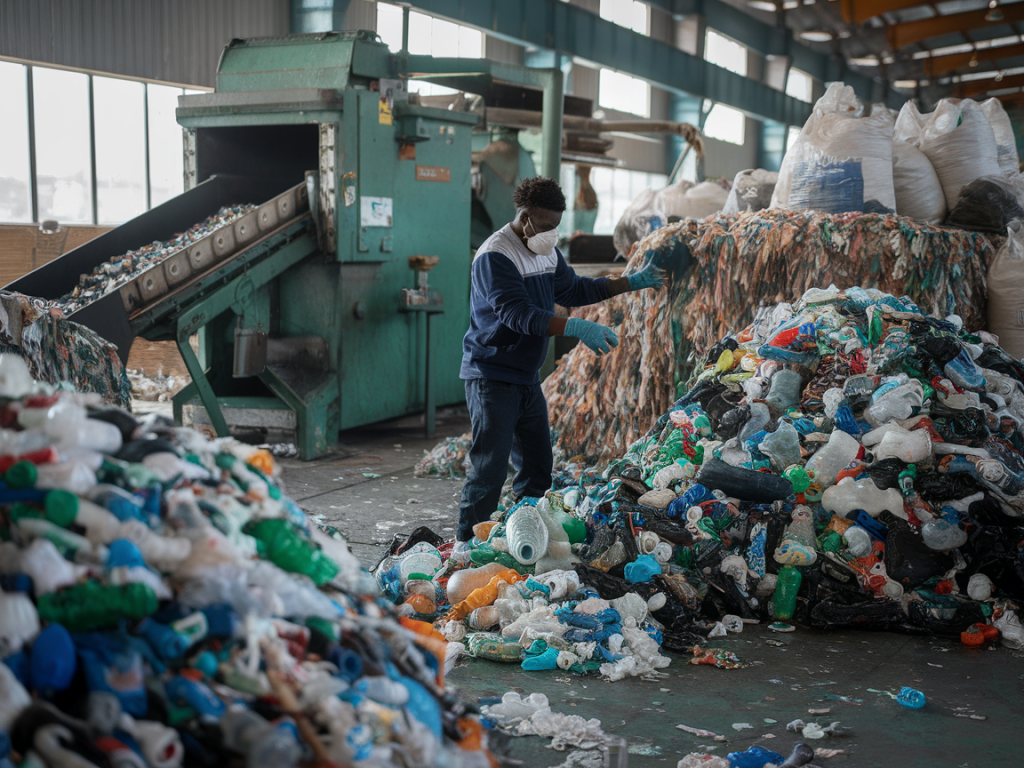
I first heard about ReBloc—a small startup that transforms post-consumer plastic into dense interlocking building blocks—while reporting from a waste-to-energy conference in Rotterdam. What stuck with me wasn’t just the novelty of turning shampoo bottles into bricks, but the simplicity and potential scale of the idea. Over the past months I’ve followed their pilots, spoken with engineers, builders and local councils, and visited a demo site where a small affordable-housing project used ReBloc units alongside conventional materials. Here’s what I learned and why this could meaningfully disrupt construction.
What exactly does the startup do?
ReBloc collects mixed plastic waste—primarily HDPE, LDPE and PP—from municipal sorting centers and partner collectors. They wash and shred the material, then use a proprietary cold-compression and polymer-bonding process to form standardised, interlocking blocks. The end product looks like oversized Lego bricks: dense, modular units designed for load-bearing walls, partitions and non-structural infill.
Their pitch is straightforward: divert plastic from landfills and oceans, cut CO2 from traditional concrete production, and speed up construction through modular assembly. The manufacturing footprint is intentionally small; most of their plants are container-sized modules that can be deployed near waste sources to reduce logistics emissions.
How do these blocks perform compared to concrete or fired clay bricks?
I asked structural engineers to compare metrics. Key takeaways:
- Strength: ReBloc’s blocks meet medium-load-bearing requirements. They’re comparable to lightweight concrete in compressive strength for low-rise buildings (up to 3 storeys) but are not yet a drop-in replacement for high-rise structural concrete.
- Insulation: Plastic blocks offer better thermal insulation than traditional concrete, reducing heating and cooling loads.
- Weight and handling: They’re lighter than concrete, which speeds on-site handling and lowers foundation demands.
- Durability: Polymer-based blocks resist water, salts and many chemicals better than porous concrete, reducing long-term maintenance in certain environments.
That said, the material has limitations: thermal expansion differs from masonry, and plastics can soften at high temperatures. ReBloc addresses this with composite infill options—adding mineral aggregates or a thin concrete shell for façade and fire-resistance upgrades.
Is it safe—especially regarding fire and toxins?
Safety is the top question I heard from local authorities. ReBloc’s blocks use largely non-flame-retardant plastics, which poses risks if used without proper safeguards. Their approach is layered:
- On-site cladding with fire-rated materials (gypsum, mineral wool, cement board) for habitable buildings.
- Compound formulations that include mineral fillers to raise the ignition temperature and reduce smoke toxicity.
- Third-party testing: ReBloc has conducted EN and ASTM standard fire tests and publishes the results for different construction assemblies.
While blocks alone aren’t suitable for untreated use in all settings, when integrated into a building system with approved cladding and barriers, they meet current codes for low-rise residential and non-residential buildings in pilot jurisdictions.
What about environmental impact and lifecycle analysis?
This is where the model shines—but nuance matters. ReBloc claims a lifecycle CO2 reduction of up to 70% per cubic metre when replacing lightweight concrete, primarily because cement production is carbon-intensive. Additionally, they prevent plastic from going to landfill or incinerators.
However, the benefits depend on collection rates, transport distances and end-of-life scenarios. I reviewed an independent LCA commissioned by a European university: if the plant is local, collection rates exceed 80% and the blocks are used in long-lived buildings, the net carbon and waste benefits are compelling. If plastics have to be trucked long distances or blocks are used in short-lived temporary structures, the gains shrink.
How much do these blocks cost—and do they save money?
Cost comparisons vary by market, but in the pilot projects I tracked ReBloc’s base material cost is slightly higher than bulk concrete per cubic metre. The savings come from:
- Faster assembly due to modular interlocking (labour savings).
- Lower foundation costs because of lighter weight.
- Reduced finishes in applications where exposed plastic or composite cladding is acceptable.
For social housing and rapid-deployment needs (disaster relief, temporary classrooms), ReBloc can be cheaper overall. For traditional high-end construction, the economics require design and specification changes. ReBloc is pursuing cost reductions through scale and improved material blends.
How scalable is the model?
Scalability is the core business question. ReBloc’s modular factory design is clever: they can replicate small facilities near dense urban waste streams, reducing transport. Their biggest hurdles are consistent feedstock quality and regulatory acceptance. Plastic streams are heterogeneous—contamination with mixed polymers, metal, or organic matter can affect block consistency. ReBloc invests heavily in pre-sorting and quality control.
Regulatory acceptance varies by country. Some building codes don’t yet recognise polymer blocks as standard materials. ReBloc is working with local authorities to certify blocks under existing masonry and lightweight concrete standards, and they’re partnering with familiar brands in construction—concrete suppliers, cladding manufacturers and developer groups—to integrate their system into accepted practices.
Who benefits today—and who might be left behind?
- Beneficiaries: Municipalities seeking waste diversion, NGOs building low-cost or temporary housing, developers of low-rise projects, and environments where moisture resistance is critical (coastal facilities, storage).
- Challenged groups: Large-scale commercial developers tied to high-rise concrete and steel supply chains, and jurisdictions with strict building codes that lag in recognising new materials.
In communities where plastic waste is abundant and construction demand is urgent, the model can bring jobs (collection, sorting, local manufacturing) and tangible infrastructure improvements. I met local entrepreneurs in Ghana and the Philippines replicating similar ideas at micro-scale with promising social outcomes.
What are the remaining risks and open questions?
From my reporting, the main risks are:
- Feedstock volatility: Changes in recycling streams (e.g., export bans, improved upstream packaging design) could reduce available material.
- Regulatory lag: Building codes may slow adoption, especially for habitable buildings without long-term performance data.
- Perception and market acceptance: Many clients still associate plastic with disposability; convincing architects and occupants requires demonstration projects and certifications.
- End-of-life management: While durable, polymer buildings raise questions about future recycling. ReBloc designs blocks to be remelted or mechanically reclaimed, but that requires circular infrastructure.
How can readers, investors or policymakers get involved?
If you’re curious or motivated, here are practical steps:
- Commission a pilot: municipalities and housing agencies can fund small demonstration builds to evaluate performance locally.
- Support standards development: industry bodies and regulators can create pathways for material testing and certification.
- Invest in local collection and sorting infrastructure to stabilise feedstock and create jobs.
- Architects and developers can specify composite options that combine ReBloc blocks with fire-rated cladding for rapid approval.
| Typical block properties | |
| Compressive strength | Comparable to lightweight concrete (varies by blend) |
| Thermal conductivity | Lower than concrete—better insulation |
| Water resistance | Excellent—low absorption |
| Fire rating | Requires cladding for habitable use; improved with mineral fillers |
Watching a crew assemble a low-cost community center with these blocks felt like a glimpse of modular, circular construction that’s pragmatic—not utopian. ReBloc’s model doesn’t eliminate concrete overnight, nor does it magically solve plastics pollution, but it creates a tangible pathway where waste becomes material value. That intersection—practical, scalable and local—is where innovation often lands. I’ll keep following ReBloc and similar ventures; they’re small experiments today that might reshape a corner of construction tomorrow.